Latest Blogs

Data Storytelling Is Becoming the Most Valuable Creative Skill in Business
Businesses generate enormous amounts of information every day, but data alone has little value unless people can unders… Businesses generate enormous amounts of information every day, but data alone has little value unless people can understand it. This is where Data Storytelling is creating exciting career opportunities for creative professionals. Data Storytelling combines Graphic Design, Information Design, Data Visualization, User Experience, Business Analytics, Motion Graphics, and Communication to transform complex information into engaging visual narratives. Organizations increasingly hire creative professionals who can design dashboards, interactive reports, infographics, presentations, animations, and digital experiences that help decision-makers understand business insights quickly. Students pursuing Graphic Design, UI/UX, Motion Graphics, Animation, or Multimedia should consider learning visualization tools such as Power BI, Tableau, Adobe Illustrator, Adobe After Effects, Figma, Canva, and Excel. Technical education institutions are beginning to integrate design thinking with analytical skills because businesses require professionals who can communicate information effectively through visual content. Career opportunities include Information Designer, Data Visualization Specialist, Business Presentation Designer, Dashboard Designer, Corporate Communication Designer, and Digital Content Strategist. As Artificial Intelligence automates data analysis, human creativity remains essential for presenting insights in meaningful and engaging ways. Data Storytelling demonstrates that creative professionals are becoming strategic contributors to business decision-making rather than simply content creators.
Digital Twin Technology Is Transforming Creative Design Careers: The Future Every Student Should Know
The world of design is evolving beyond traditional sketches and computer graphics. One of the newest innovations influe… The world of design is evolving beyond traditional sketches and computer graphics. One of the newest innovations influencing architecture, manufacturing, entertainment, urban planning, healthcare, and product development is Digital Twin Technology. While many students are familiar with 3D modeling and animation, Digital Twins represent an entirely new career path where virtual models replicate real-world objects, systems, or environments in real time. A Digital Twin is a dynamic digital representation of a physical object. Engineers use it to simulate factories, architects visualize smart buildings before construction, healthcare professionals model hospitals, and filmmakers create realistic virtual production environments. Companies such as automotive manufacturers, aerospace firms, and smart city developers are investing heavily in Digital Twin technology. For students pursuing Graphic Design, Animation, Interior Design, Architecture, Game Design, or Visual Communication, this technology opens exciting employment opportunities. Designers now collaborate with software developers, AI engineers, and data scientists to build immersive digital experiences. Technical education institutions are gradually introducing interdisciplinary programmes covering 3D Design, CAD Modeling, Blender, Unreal Engine, Unity, Artificial Intelligence, Internet of Things (IoT), and Virtual Simulation. Graduates with Digital Twin expertise can work as Digital Experience Designers, 3D Visualization Specialists, Simulation Designers, Virtual Environment Developers, and Product Visualization Experts. The future of creative design lies in combining imagination with intelligent technology. Students who embrace Digital Twin platforms today will be among the most sought-after professionals in tomorrow's digital economy.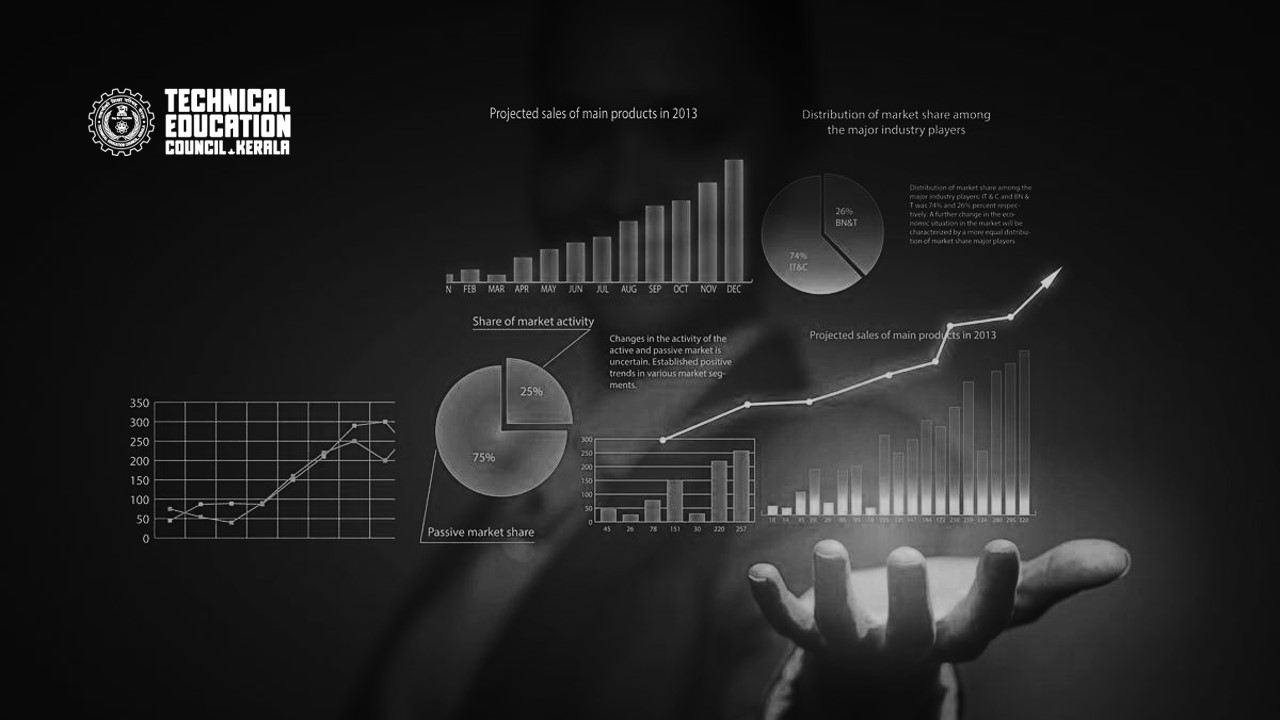
Decision Intelligence Is Emerging as the Future of Business Management
Every business makes thousands of decisions every day. What products should be launched? Where should investments… Every business makes thousands of decisions every day. What products should be launched? Where should investments be made? Which customers require attention? How should supply chains be optimized? Increasingly, organizations are answering these questions using Decision Intelligence, an emerging discipline that combines Artificial Intelligence, Business Analytics, Data Science, Economics, and Human Decision-Making. Unlike traditional business analysis, Decision Intelligence focuses on helping leaders make faster, more accurate, and evidence-based decisions. Companies now analyze customer behavior, financial performance, operational efficiency, market trends, and business risks using intelligent decision-support systems. Technical education institutions are beginning to introduce interdisciplinary programs covering Artificial Intelligence for Business, Business Analytics, Data Visualization, Predictive Modeling, Decision Science, Operations Research, and Strategic Management. Professionals skilled in Decision Intelligence work across banking, consulting, logistics, healthcare, retail, manufacturing, and government organizations. As businesses generate increasing amounts of data, the ability to convert information into strategic action has become one of the most valuable management skills. Students who understand technology, business strategy, and analytical thinking will become future business leaders capable of navigating increasingly complex organizational environments. Decision Intelligence is not simply another business trend—it represents the next generation of strategic management.
Financial Data Analytics Is Becoming More Important Than Traditional Accounting
Accounting remains one of the most respected business professions, but the role of finance professionals is rapidly evo… Accounting remains one of the most respected business professions, but the role of finance professionals is rapidly evolving. Today's organizations require professionals who can analyze financial data, predict business performance, identify investment opportunities, and support executive decision-making. This growing discipline is known as Financial Data Analytics. Modern finance professionals use technologies such as Power BI, Excel, Python, SQL, Tableau, Artificial Intelligence, Business Intelligence, and Predictive Analytics to transform financial information into strategic insights. Technical education institutions are increasingly combining traditional accounting education with analytics, visualization, forecasting, and financial technology. Professionals capable of interpreting complex financial information are highly valued across banking, consulting, manufacturing, healthcare, insurance, and technology sectors. Financial Data Analysts support budgeting, investment planning, risk management, fraud detection, performance measurement, and strategic growth initiatives. Industry experts believe future finance leaders will rely more heavily on analytical thinking than manual accounting processes. Students entering finance education today should prioritize analytical capabilities alongside accounting fundamentals. Financial Data Analytics represents the next evolution of modern finance careers.
Business Process Automation Is Creating Thousands of New Management Careers
Automation is no longer limited to manufacturing industries. Modern businesses are automating finance, human resources,… Automation is no longer limited to manufacturing industries. Modern businesses are automating finance, human resources, procurement, customer support, compliance, inventory management, and administrative operations. This transformation has created significant demand for professionals specializing in Business Process Automation (BPA). Organizations use technologies such as Robotic Process Automation (RPA), Artificial Intelligence, Workflow Automation, Digital Documentation, Process Mining, and Intelligent Business Systems to improve operational efficiency. Rather than replacing employees, automation is creating new roles that focus on designing, monitoring, improving, and managing digital business processes. Technical education institutions are introducing practical training in Business Process Management, Digital Transformation, Automation Tools, AI Applications, Process Analysis, Lean Management, and Enterprise Software. Business Process Analysts collaborate with technology teams to redesign workflows, reduce operational costs, improve customer experiences, and support organizational growth. As businesses continue investing in digital transformation, professionals capable of combining management knowledge with technology skills will enjoy excellent employment opportunities. Students pursuing business education should understand that future managers will increasingly supervise intelligent systems alongside human teams. Business Process Automation is becoming one of the strongest career pathways in modern management.
Revenue Operations (RevOps): The Business Career That Few Students Know About
Many students dream of careers in marketing, finance, or sales, but very few are aware of one of the fastest-growing bu… Many students dream of careers in marketing, finance, or sales, but very few are aware of one of the fastest-growing business functions—Revenue Operations (RevOps). Revenue Operations integrates sales, marketing, customer success, finance, and analytics into one unified strategy. Instead of departments working independently, RevOps professionals use technology and data to improve business performance and customer experience. As businesses increasingly adopt digital transformation, organizations require professionals who understand CRM systems, business intelligence, sales analytics, financial reporting, workflow automation, and customer lifecycle management. Technical education institutions are gradually introducing practical learning in Business Analytics, CRM Management, Data Visualization, Financial Planning, Marketing Analytics, SQL, Excel, Power BI, and Artificial Intelligence for Business. Revenue Operations professionals analyze customer data, identify revenue opportunities, improve operational efficiency, and support strategic decision-making. Industries including Software, Healthcare, Manufacturing, E-commerce, Financial Services, and Consulting are actively hiring RevOps professionals because data-driven decision-making has become essential for business growth. Students with analytical thinking, communication skills, and business knowledge can quickly adapt to this rapidly growing field. Revenue Operations represents the future of integrated business management where technology and strategic planning work together to drive organizational success.
Green Finance Careers Are Rising: Why Sustainability Skills Are Becoming Essential for Business Graduates
The business world is undergoing a transformation unlike anything seen before. Companies are no longer evaluated only o… The business world is undergoing a transformation unlike anything seen before. Companies are no longer evaluated only on profits—they are increasingly measured by how responsibly they manage environmental, social, and governance (ESG) issues. This global shift has created one of the fastest-growing career fields in business education: Green Finance. Green Finance involves funding projects that promote environmental sustainability, renewable energy, clean technology, sustainable infrastructure, and responsible business practices. Banks, investment firms, multinational corporations, insurance companies, and consulting organizations are actively recruiting professionals who understand sustainable finance principles. Technical education institutions are beginning to integrate ESG Reporting, Sustainable Business Management, Carbon Accounting, Green Investments, Climate Risk Assessment, Financial Analytics, and Corporate Governance into management programs. Students who combine finance knowledge with sustainability concepts will find opportunities as ESG Analysts, Sustainability Consultants, Green Investment Advisors, Risk Analysts, and Corporate Strategy Professionals. Governments and private investors are investing billions in renewable energy and sustainable infrastructure, making green finance one of the fastest-expanding employment sectors worldwide. Unlike traditional finance careers, Green Finance combines profitability with social responsibility, allowing professionals to contribute to long-term environmental development while building successful careers. For students entering management education today, sustainability knowledge is becoming a competitive advantage rather than an optional specialization.
AI Model Optimization Is Becoming One of the Most Valuable Hidden Skills in Machine Learning
Building Artificial Intelligence models is only part of the challenge. Modern businesses increasingly require professio… Building Artificial Intelligence models is only part of the challenge. Modern businesses increasingly require professionals capable of making AI systems faster, smaller, more efficient, and less expensive to operate. This rapidly growing field is known as AI Model Optimization. Organizations deploying AI in smartphones, autonomous vehicles, industrial robots, healthcare devices, and cloud platforms require optimized models capable of delivering high performance while consuming minimal computing resources. AI optimization techniques include Model Quantization, Knowledge Distillation, Neural Network Compression, Edge AI Deployment, GPU Optimization, and Efficient Deep Learning. Technical education institutions are gradually expanding Machine Learning programs beyond algorithm development to include optimization strategies and AI deployment. Students studying Artificial Intelligence, Data Science, Computer Science, and Cloud Computing can significantly improve employability by understanding how to optimize AI models for real-world applications. Industry experts note that businesses increasingly value engineers capable of reducing infrastructure costs while maintaining AI accuracy. As organizations deploy AI at scale, optimization specialists will become essential members of machine learning teams. The future of Artificial Intelligence will depend not only on creating smarter models but also on making them practical, affordable, and accessible across billions of connected devices.
Spatial Computing Is Opening a New World of Technical Careers
While Artificial Intelligence continues making headlines, another technology is quietly gaining momentum—Spatial Comput… While Artificial Intelligence continues making headlines, another technology is quietly gaining momentum—Spatial Computing. Spatial Computing combines Augmented Reality (AR), Virtual Reality (VR), Mixed Reality (MR), Artificial Intelligence, Computer Vision, and 3D Mapping to create immersive digital experiences. Manufacturing companies use spatial computing to train workers safely. Medical professionals perform realistic surgical simulations. Engineers visualize complex industrial systems before construction. Retail businesses create virtual shopping experiences, while educational institutions develop immersive learning environments. Technical education providers are beginning to introduce interdisciplinary programs combining software development, 3D design, AI, computer vision, gaming technologies, and user experience design. Students with knowledge of Unity, Unreal Engine, Computer Graphics, Artificial Intelligence, AR Development, VR Programming, and Spatial Design will find growing opportunities across multiple industries. Industry experts predict that spatial computing will transform engineering, healthcare, manufacturing, architecture, education, and entertainment over the coming decade. The technology also creates opportunities for entrepreneurs developing immersive training platforms, digital collaboration tools, and virtual workplaces. As hardware becomes more affordable and AI capabilities continue expanding, spatial computing is expected to become a mainstream technology. Students entering technical education today can position themselves at the forefront of this next-generation computing revolution.