Latest News

Google Cloud Outage Highlights Growing Importance of Cloud Infrastructure Education
New Delhi, June 2026: A recent disruption affecting Google Cloud services in India following a fire-related incident at a third-party facility has renewed discussions about cloud infrastructure resilience and disaster recovery planning. The incident caused service interruptions and increased latency across multiple regions, affecting digital services and enterprise applications. Technical education experts say such real-world events demonstrate why students need practical training in cloud architecture, business continuity planning, network redundancy, and infrastructure management. Universities and cloud training providers are increasingly incorporating disaster recovery simulations and cloud operations modules into their curricula.

Cloud Computing Becomes One of India's Most In-Demand Technical Skills
Bengaluru, June 2026: Cloud Computing continues to dominate technology hiring trends across India. Organizations are actively recruiting professionals skilled in AWS, Microsoft Azure, Google Cloud Platform, Docker, Kubernetes, Terraform, and Infrastructure Automation. Industry reports indicate that cloud adoption is accelerating across sectors including finance, healthcare, e-commerce, and government services. As a result, technical education providers are launching job-oriented programs focused on Cloud Engineering, Site Reliability Engineering (SRE), and Cloud Operations. Experts believe cloud computing will remain a critical technology skill for the next decade as businesses continue migrating applications and infrastructure to cloud environments.
Universities Launch New B.Tech Programs in Cybersecurity and Cloud Technologies
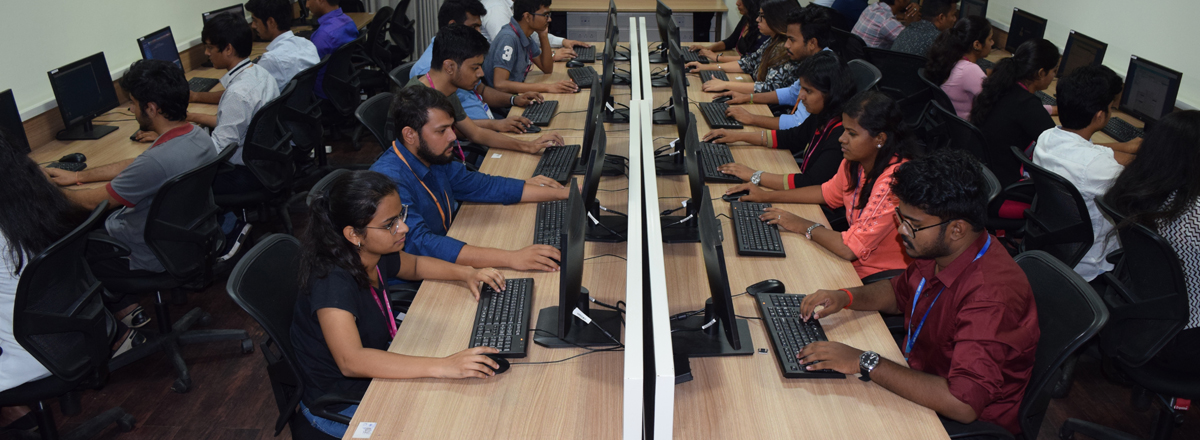
Punjab, June 2026: Higher education institutions across India are rapidly expanding their technical course offerings to include specialized programs in Cybersecurity, Artificial Intelligence, Cloud Computing, and DevOps Engineering. Recently, Sardar Beant Singh State University announced new industry-aligned programs including B.Tech specializations with mandatory internships and live projects to improve graduate employability. Similarly, several universities are introducing cloud-focused engineering pathways designed around AWS, Azure, Kubernetes, and modern infrastructure technologies. Education experts say traditional computer science programs are increasingly being supplemented by specialization tracks focused on practical industry requirements.

Cybersecurity Courses See Record Enrolments as India Faces Growing Digital Threats
New Delhi, June 2026: Cybersecurity has emerged as one of the fastest-growing technical education sectors in India. Universities, technical institutes, and online learning platforms are reporting record enrolments in courses related to Ethical Hacking, Cloud Security, Digital Forensics, Security Operations Centers (SOC), and Cyber Threat Intelligence. Industry experts estimate that India could face a shortage of nearly one million cybersecurity professionals by 2030, creating significant employment opportunities for students entering the field. Educational institutions are responding by launching specialized cybersecurity degree programs, certifications, and internship-driven training models. Experts believe cybersecurity will remain one of the most recession-resistant and future-proof career domains within the technology sector.

Central Sanskrit University Launches India's First AI & Data Science B.Tech
New Delhi, June 2026: In one of the most unique developments in technical education, Central Sanskrit University has received approval to launch a B.Tech in Artificial Intelligence and Data Science. This is the first time a Sanskrit university in India has entered the field of engineering and advanced technology education. The program aims to combine India's traditional knowledge systems with modern technological innovation. The course will begin with an intake of 60 students and is expected to attract learners interested in both technology and interdisciplinary education. Education analysts describe the initiative as a symbol of how AI is becoming a universal discipline, extending beyond conventional engineering institutions into diverse educational ecosystems.

AI Enters Humanities Education: BA Students Can Now Study AI
Lucknow, June 2026: In a groundbreaking interdisciplinary initiative, Lucknow University has enabled Bachelor of Arts students to choose Artificial Intelligence and Computer Science-related subjects as part of their degree programs. Traditionally, AI education has been restricted to engineering and technology disciplines. However, universities are increasingly recognizing that AI knowledge will be valuable across all sectors, including journalism, public administration, law, business, and social sciences. Experts say this move reflects a broader shift toward multidisciplinary education, where students can combine humanities knowledge with emerging technology skills to improve employability and future career prospects.
IIT Madras Launches New AI Courses Under 'AI for All' Initiative
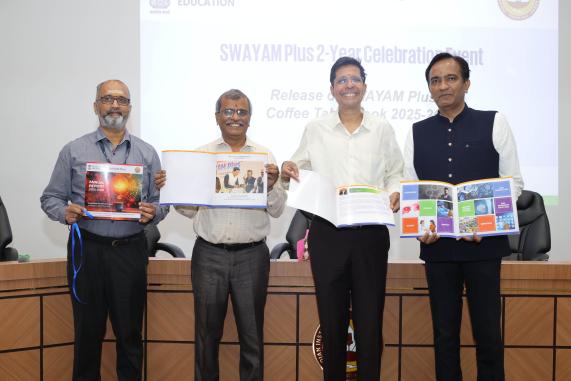
Chennai, June 2026: Indian Institute of Technology Madras has launched three new Artificial Intelligence courses through its SWAYAM Plus platform as part of the national "AI for All" campaign. The new offerings include AI for Aspiring Engineers, AI for Administrators, and Prompt Engineering. What makes these programs unique is their accessibility. The courses are designed for beginners and require no prior experience in coding or AI. The objective is to democratize AI education and make emerging technologies accessible to learners from diverse academic backgrounds. Industry leaders have welcomed the initiative, stating that AI literacy is becoming essential across professions, not just for software developers and engineers.
AI and Machine Learning Courses Witness Massive Demand Across Engineering Colleges
Ahmedabad, June 2026: Artificial Intelligence and Machine Learning have become the most sought-after specializations among engineering students in India. Responding to unprecedented demand, colleges across Gujarat have added nearly 1,500 additional seats in AI and ML programs for the upcoming academic year. This marks one of the largest expansions in emerging technology education in recent years. Education experts attribute this trend to the growing demand for AI professionals across industries such as healthcare, finance, manufacturing, cybersecurity, and e-commerce. Students increasingly view AI and Machine Learning as high-growth career paths with strong salary potential and global opportunities. Universities are also introducing specialized laboratories, AI research centers, and industry partnerships to provide practical exposure. Experts believe this trend will continue as organizations accelerate AI adoption and digital transformation initiatives.

IIIT Allahabad Launches Online M.Tech in AI and Data Science
Prayagraj, June 2026: In a significant boost for online technical education, Indian Institute of Information Technology Allahabad has announced a new Online M.Tech program in Artificial Intelligence and Data Science. The program is designed to provide advanced AI education to students and working professionals across the country. The initiative reflects the growing popularity of flexible online learning models, particularly in high-demand technology domains. Students will be able to gain advanced skills in AI, machine learning, data analytics, and predictive modeling without relocating or leaving their jobs. Experts believe such programs will play a crucial role in addressing India's growing demand for AI talent while making quality technical education more accessible nationwide.
Government Plans Major AI Curriculum Reform for Engineering Education
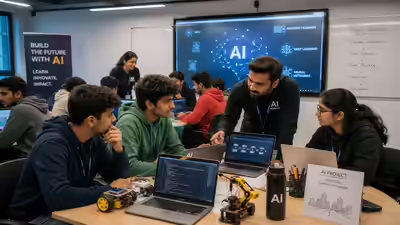
New Delhi, June 2026: The Government of India is preparing a major overhaul of AI education across engineering institutions. The proposed reforms focus on introducing industry-linked AI training, real-world projects, and hands-on learning from the first semester itself. Officials have expressed concerns that traditional engineering curricula are struggling to keep pace with rapid advancements in Generative AI, Machine Learning, and Large Language Models. The new framework aims to shift education away from lecture-heavy methods toward project-based learning. The initiative also includes plans for a shared national GPU infrastructure to support AI research and experimentation across colleges. Experts believe this could significantly strengthen India's AI talent pipeline and improve graduate employability in emerging technology sectors.